Wednesday, January 27, 2016

American Fiction from 1950 to Present

Hi, Readers!

post modernism       After taking a brief hiatus from the world of blogging, I am now back and better than ever!  I never believed people when they said they were too busy to read, but now that I'm in college, I've experienced the terror of complete time management for the first time.  From classes to homework to basketball to extracurriculars, I barely have time to catch my breath.  As of 2016, (Happy belated New Year!) I am trying very hard to break the habit of monotonously binge-watching Netflix before bed and picking up a book instead - new year, new me.

       This semester, I have the pleasure of taking three literature courses at Tufts University - Environmental Justice and World Literature, Latin American Literature, and American Fiction from 1950 to Present.  Shoutout to all you English majors out there, because there sure is a lot of reading for homework.  As syllabus week is coming to a close, I just recently went to the bookstore to purchase all of my required textbooks.  I couldn't believe my eyes as I examined my American Fiction syllabus, for which I had to purchase fourteen books!  When I brought all of the novels to the register, the cashier took one look at the stack and said, "Wow, that's a lot of books there.  You must be smart."  In my head I thought to myself, Or maybe I'm just really dumb for taking such a difficult class.  Only time will tell.

       According to my professor, the novels that we will be reading over the next five months span from the most well-known post-modern literature to some extremely obscure pieces.  I, for one, have not heard of a single one of the titles.  Guess that shows how much I know about American Literature 1950 to Present.  However, I'm excited to learn about post-modernism and explore the work of some diverse authors.

       As I read my way through the American Fiction from 1950 to Present syllabus, I will be reviewing each book here on Book Savvy.  We read each novel in about a week and discuss it over the span of two or three classes, and I will then share my concluding thoughts here on my blog afterward.  Hopefully some of them will be worth recommending to you, but I will also be sure to give you a heads-up on which books are snooze fests.

Here is a list of the books I will be reading:

  1. The Subterraneans, by Jack Kerouac
  2. No-No Boy, by John Okada
  3. The Crying of Lot 49, by Thomas Pynchon
  4. Why Are We In Vietnam?, by Norman Mailer
  5. Play It As It Lays, by Joan Didion
  6. Fear and Loathing in Las Vegas, by Hunter S. Thompson (not pictured)
  7. The Bell Jar, by Sylvia Plath
  8. Corregidora, by Gayl Jones
  9. Flight to Canada, by Ishmael Reed
  10. Speedboat, by Renata Adler
  11. The Shawl, by Cynthia Ozick
  12. Less Than Zero, by Brett Easton Ellis
  13. Girl With Curious Hair, by David Foster Wallace
  14. Consider the Lobster, by David Foster Wallace
First up... Kerouac!
To be completely honest, I am pretty intimidated looking at this list of novels.  It totals up to 3,030 pages of reading to be discussed in a mere 25 classes (yes, I did the math myself).  For comparison, not including the introductory first class, we will be discussing over 126 pages of literature in depth each class.  Plus, my class is practically all seniors who clearly know much more about post-modern literature than I do.  Boy, do I have my work cut out for me.

Well, wish me luck as I attend my second class on The Subterraneans tomorrow morning.  I can't wait to share my thoughts on the novel with you in my next post!

Happy reading!
Katie

Monday, July 13, 2015

Book Review: I Will Always Write Back

I Will Always Write Back
Title: I Will Always Write Back: How One Letter Changed Two Lives
Author: Caitlin Alifirenka, Martin Ganda, and Liz Welch
Publication Date: April 14, 2015
Publisher: Little, Brown Books for Young Readers
Genre: Non fiction
Pages: 392
Age Rating: Readers over 10
My Opinion: 8/10

Hi, Readers!

       Guess who recommended that I read I Will Always Write Back?  My mom!  Boy, am I glad I listened to her (which doesn't happen very often).  I enjoyed reading this true story, and it is so unique and touching that, although it isn't particularly exciting or thrilling, everybody should read it if they have the chance. 

       Caitlin is a middle schooler who gets to choose a pen pal from a foreign country for a school assignment.  Wanting to be unique, she selects Zimbabwe, a country in Africa.  She drafts a short letter describing herself and her life in America as a wealthy, white tween.  When Caitlin gets a letter back in response from an African boy named Martin, the two begin a long-lasting friendship created through letters and photos sent back and forth.  Little does Caitlin know, however, that Martin is living in extreme poverty, and his entire family lives in one room shared with another man.  They hardly have enough food to eat and don't own proper shoes, while Caitlin lives lavishly.  As soon as Caitlin discovers the plight that her friend is in, she makes it her mission to aid Martin financially and support him in his academic endeavors, through thick and thin.  Through Martin's many struggles, readers are exposed to an entirely different way of life, and the power of Caitlin's generous helping hand shows that everybody can make an impact on the world.

Martin and Caitlin
Martin and Caitlin
       I was shocked and surprised on practically every page while reading I Will Always Write Back.  When I started the book, I was like, "Oh, sure.  Martin is poor."  However, I didn't understand the true meaning of poverty in Martin's community and in Zimbabwe.  Just think - Martin didn't own a pair of shoes until he was in HIGH SCHOOL.  Meanwhile, in America, toddlers stumble around in Nike sneakers and Uggs.  Additionally, my eyes were opened (once again) when Caitlin tried to send money to Martin.  Never would I have expected that the postal service may try to intercept letters and take out the money.  Plus, I never thought that twenty American dollars would be worth hundreds in Zimbabwe.  The vast wealth gap between the rich and poor is all the more evident in Zimbabwe than in the United States.  I almost couldn't believe how Caitlin's family's generosity was able to support Martin's entire family for years.  It inspires me to want to make a difference in one of these countries, and it shows how easy it is to completely turn around someone's life.

One of Caitlin's letters
       The smallest details of life are discussed in I Will Always Write Back.  Although I believe that all of the information in the book was necessary, it was not all completely interesting.  For instance, a large portion of the story was devoted to Martin's college search in the United States, and it seemed to drag on and on when Martin was unable to receive a scholarship.  It may not have made the most exciting plot line, but I'm sure that Caitlin's family felt the same way in real life that I felt while reading.  Also, I wish that Martin's culture was discussed the same amount that Caitlin's was.

       All in all, this book is a must-read.  Sure, I only gave it an 8 out of 10 rating, but it is most certainly worth the time to read.  It almost reminds me of the book Nickel and Dimed in a sense, because it opens up the readers' eyes to how people manage to survive through poverty, hunger, stress, and a plethora of other issues that I could never even dream of.  Of course, the story concludes with a happy ending, but learning about Martin and Caitlin's tight bond throughout the years and Martin's success is heartwarming and inspiring.

Happy reading!
Katie

Wednesday, April 8, 2015

New Release Book Review: Kalahari

Kalahari
Title: Kalahari
Author: Jessica Khoury
Publication Date: February 24, 2015
Publisher: Razorbill
Genre: Science fiction
Pages: 368
Age Rating: Readers over 13
My Opinion: 7/10

Hi, Readers!

       I guess I've been in a Jessica Khoury mood lately, and I decided to read the last published book in the Corpus series, Kalahari.  After loving book one, Origin, and feeling disheartened by book two, Vitro, I was glad to find that Kalahari was almost as good as the first Corpus novel.  It had a slow start, but by the end of the novel, I was hanging on to every word that Khoury wrote.

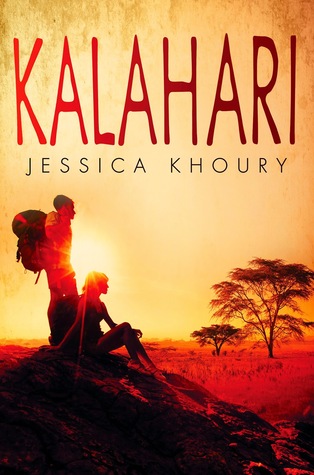
Kalahari       Sarah lives in the middle of the Kalahari Desert in Africa with her father and a bushman guide.  The three have been doing scientific research there for as long as Sarah can remember, and she has had little contact with the outside world.  When the group runs short on research funds, they agree to host five teenagers at their campsite in exchange for extra funding.  However, they have no idea that these teens are completely inexperienced in the wilderness and are used to luxury accommodations.  When Sarah's dad mysteriously goes missing one night, she embarks on a journey with the teenagers to find him.  Along the way, she begins to discover some mysterious clues, including a silver lion.  Instead of finding her father, she begins to find something much more dangerous.  Faced with difficult life-or-death decisions, Sarah must lead this group of teens safely through the Kalahari, find her father, and solve the puzzling mystery she has unearthed.

       When the novel began, I was not a big fan of Sarah as a character.  She is clueless when it comes to social interaction, and her idea of fun is seeing who can throw monkey pellets the farthest.  Yawn.  However, by the end of the story, although she doesn't seem like the coolest teenager around, she demonstrates admirable bravery and determination, and she is a strong role model for younger readers.

Kalahari
The Kalahari Desert
       One of my favorite parts about Khoury's writing style is that she is not afraid to kill off characters.  I had absolutely no idea who would survive or die throughout Sarah's adventure through the desert, which made me want to read on and on.  Also, Khoury did an excellent job including the perfect amount of romance in the novel - not too little but not too much.  Kalahari was mostly action-packed, but there were a few sweet scenes between Sarah and one of the teen visitors that made her more relatable.

       On the other hand, in my opinion, the plot line of Kalahari was a bit far-fetched, even for a science fiction novel.  There was not enough background information about the setting or about the science, and it left me questioning the plausibility, even in an alternate world, of the adventure happening.

       All in all, Kalahari is the second best book in the series for sure.  There is no beating Origin, but it wasn't hard to surpass Vitro.  My suggestion to you, readers, is to read Origin, skip Vitro, and only pick up Kalahari if you have a lot of extra time to read a pretty good book.

Happy reading!

Wednesday, March 25, 2015

Book Review: Vitro

Vitro
Title: Vitro
Author: Jessica Khoury
Publication Date: January 14, 2014
Publisher: Razorbill
Genre: Science fiction
Pages: 384
Age Rating: Readers over 14
My Opinion: 5/10

Hi, Readers!

       If you happened to read my last post about Origin, you would have discovered how excited I was to read Vitro next.  Now that I've read it... boy, am I disappointed.  Jessica Khoury did such a phenomenal job making Origin a thrilling novel with unique and interesting characters, and I was expecting the same level of writing in the next novel of the Corpus series.  Sadly, Vitro was not up to the same standards.

map
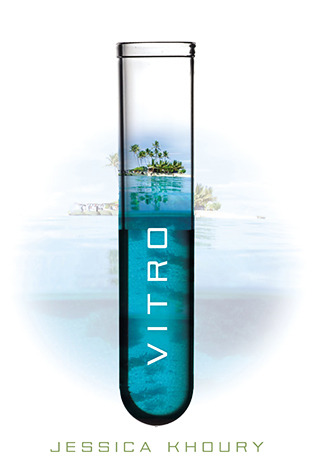
       Sophie Crue has lived with her dad her entire life while her mother is on Skin Island, in Guam, doing scientific research.  However, out of the blue, Sophie gets a mysterious e-mail from her mother begging her to come to Skin Island ASAP due to an emergency.  Of course, Sophie leaps at the opportunity to visit, and she convinces her childhood friend, Jim, to fly her there on his airplane.  When the two arrive, they instantly realize that there is something mysterious happening on Skin Island.  They encounter a strand of genetically enhanced humans, named Vitros, who imprint on a single person as slaves.  A few of the prototype Vitros have went off the deep end, and they capture Sophie as a ransom to free themselves.  Worst of all, one of the Vitros, Lux, looks exactly like Sophie.  Sophie has to face a number of heart wrenching decisions, and must manage to survive her time on the island of horrors if she wishes to save the lives of the Vitros and herself.

Skin Island
What I would imagine Skin Island looks like
       As you may be able to tell from my summary above, Vitro was a pretty confusing novel.  What I noticed early on was that Khoury tried so hard to make the novel mysterious that she withheld too much information from the readers.  She relied too much on fast-paced action scenes, violence, and evil characters, and she did not put enough focus on the background of Skin Island and its inhabitants.  It seemed as though every chapter was filled with airplane crashes, explosions, guns, and kidnapping scenes.  In my opinion, Khoury should have focused a little bit more on the characters of the novel and their emotions, and less on the action.

Kalahari
Up next... Hopefully I saved
the best for last!
       The characters in Vitro were certainly much less developed than those in Origin.  Khoury attempted to create a backstory between Sophie and Jim where they were childhood friends, but the whole thing seemed pretty implausible.  I found it too unlikely that they would grow up together on a tropical island, get seperated for ten years, and then just happen to meet up again out of the blue.  Guess I need to work on my suspension of disbelief.  Also, I was not particularly fond of most of the characters in the novel, Jim in particular.  They were not very likeable or relatable, and I didn't form an emotional connection with them at all.  One character that I did enjoy reading about was the psychopathic Nicholas, who had a lot of potential to be a deep and unique character, but I felt let down when Khoury only developed him on the surface and made him fairly stereotypical.  

       I wish that Vitro was on the same level stylistically and content-wise as Origin, but it had a completely different vibe.  If you've already read Origin, spare yourself the time and don't bother checking out Vitro.  All problems aside, I am still planning on reading Khoury's third book in the series, Kalahari.  Fingers crossed that Khoury sticks with her guns and has written it comparably to Origin!

Happy reading!
Katie

Wednesday, March 11, 2015

Book Review: Origin

Origin
Title: Origin
Author: Jessica Khoury
Publication Date: September 4, 2012
Publisher: Razorbill
Genre: Science fiction
Pages: 394
Age Rating: Readers over 11
My Opinion: 9/10

Hi, Readers!

       Each year, my public library has an annual book sale.  The books I usually purchase here are hit or miss, because all I know about them comes from the short blurb on the back.  Luckily, when I bought Origin at the book sale, I came into possession of a real gem.  I was enthralled with the characters, plot line, and themes of the novel, and it kept me reading late into the night.

Eio
Pia's jungle boy, Eio
       Pia's genes have been genetically bred over five lifetimes so that she is born immortal.  Her skin is impenetrable, her immune system is unbreakable, and she is... perfect.  However, Pia has never been outside of her small compound, Little Cam, located in the middle of a vast jungle.  Although Pia knows everything there is to know about science and math, she has never even heard of New York City, or even cities in general.  The scientists, especially Uncle Paolo, keep Pia on a strict regimen of learning and exercising in order to turn her into a superhuman who will eventually reproduce and be the start of a new, immortal population.  One day, Pia notices a hole in the electric fence surrounding Little Cam.  When she enters the jungle and the real world for the first time, Pia's life is completely changed.  She meets Eio, a local native boy, who shows her that there is more to life than test tubes and immortality.  Torn between two worlds, Pia must now decide where she belongs - future or present, science or emotion, and civilization or jungle.

 
quote
       Just recently, in English class, we discussed the idea of perspective.  Seeing things from a different point of view can show readers that there is not just one way of living.  My favorite part about Origin is the first-person perspective of Pia, because she is relatable and yet entirely unrelatable at the same time.  Of course, being immortal, Pia lives life much differently than the average human.  However, she still feels happiness, sadness, and, most importantly, love.  The dilemma that Pia must face, although not realistic in the real world, creates a sort of empathy between her and the reader.  We go along the journey with her, finding out more of the truth as the plot line progresses.  

Vitro
Up next... Vitro!
       One of the most brilliant aspects of Origin is that author Jessica Khoury was able to create a science fiction novel with a unique plot line.  Although I did pick up some hints of popular dystopian and science fiction books thrown in, the work of literature was about a new topic and had undiscovered characters.  In the age of mass-produced literature, I applaud Khoury's distinct style of writing and original ideas.  The Young Adult genre is filled with many "fake" novels that try to replicate the well-known ones in order to sell more copies, and I am happy to say that Origin is not one of those books.

       I would recommend Origin to anyone who enjoys The Hunger Games or Divergent.  Although Origin is a less extreme and hard-hitting version of those popular novels, it explores much more of the emotional impacts of dramatic events.  Now, I can't wait to get my hands on Khoury's next novel, Vitro, to see if it is just as good as Origin

Happy reading!
Katie