Showing posts with label Realistic fiction. Show all posts

Sunday, January 7, 2018

New Release Book Review: Turtles All the Way Down

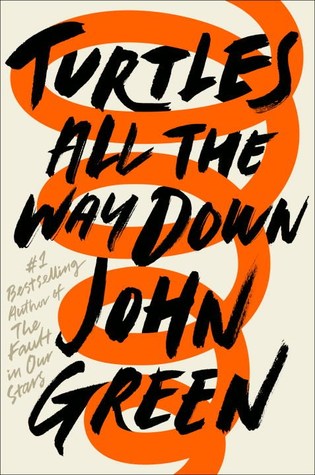
Turtles All the Way Down
Title: Turtles All the Way Down
Author: John Green
Publication Date: October 10, 2017
Genre: Realistic fiction
Pages: 286
Age Rating: Readers over 13
My Opinion: 7/10

Hi, Readers!

       Happy New Year!  I hope everybody got to unwrap lots of new books over the holidays.  I know I sure did, and I'm super excited to read them.  One of the best parts about winter break is getting the opportunity to snuggle under a blanket with some hot chocolate and enjoy a good book (which is what I'm doing right now).  One of my best friends had loaned me John Green's newest novel, Turtles All the Way Down, a couple of months ago, and I finally got around to finishing it this afternoon.  Although I had a lot of trouble getting into the story at first (hence the two months it took me to read the entire thing), I ended up feeling satisfied by the end.

       Aza Holmes is a high schooler who struggles with a number of mental issues such as OCD and anxiety.  She spends her days locked away in the spiral of her own mind, escaping only when dragged out by her best friend, Daisy.  When the father of Aza's old camp friend and now unbelievably wealthy neighbor, Davis, suddenly goes missing, Aza and Daisy decide to search for some clues.  Under these unusual circumstances, Aza is reconnected with Davis, and the two of them attempt to navigate this difficult time in their lives together.  John Green's beautiful prose weave together Aza and Davis's relationship with the struggles of being a teenager and the intense labyrinth of Aza's mind to create a story of hardship and friendship.

Turtles
Aza's perspective on "Turtles all the way down"
       As you may know from some of my previous blog posts, John Green is one of my favorite authors of all time.  He has such a strong voice as a writer and never fails to capture unique perspectives perfectly.  His books are filled with powerful one-liners that always stick with me for weeks after reading them.  To be completely honest, though, I felt that Green may have tried a little bit too hard on this one.  He hadn't released a novel in a while, and I felt that some of the universal revelations in Turtles were a tad bit forced.  For instance, after including an anecdote explaining the title, Green went back and referenced the title yet again, unnecessarily, a few pages later.  In addition, although Aza's mental struggles are the main focus of the novel, Green falls back on the same description words often, such as "thought spirals."  I wish that a few different perspectives on the mental illness could have been included.

       I definitely enjoyed the second half of the novel more than the first.  One of my favorite scenes came near the end of the novel, when Aza and Daisy attend an underground art show.  Although Aza feels like she doesn't change as a person throughout the course of the novel, she definitely learns the importance of friendship and loyalty.  I wish that the end of the book had been different, but I did not feel like anything was missing in the conclusion.

       Turtles opened my eyes to the perspective of people suffering from mental illnesses, and for that reason I would recommend it to a friend.  It's a pretty heavy topic and is much more serious than the books I usually enjoy reading, but I learned a lot and I'm glad I finished it.

Happy reading, and stay warm!
Katie


P.S. Just wanted to share - my Creative Writing professor from last semester is in the same Fantasy Soccer league as John Green! How cool is that?!

Monday, October 30, 2017

Book Review: Me Earl and the Dying Girl

Me Earl and the Dying Girl
Title: Me Earl and the Dying Girl
Author: Jesse Andrews
Publication Date: March 1, 2012
Genre: Realistic fiction
Pages: 295
Age Rating: Readers over 13
My Opinion: 9/10

Hi, Readers,

       Sometimes life throws us curveballs.  If you read my last post, you would have easily been able to tell how excited I was to get back to reading and blogging.  Well, unfortunately my aspirations were briefly put on hold due to a minor concussion.  Thankfully, my noggin is almost fully healed, and I was able to finish reading Me Earl and the Dying Girl with only minimal headaches.  Woohoo!

       The "Me" in Me Earl and the Dying Girl is Greg Gaines, a senior in high school who is trying his best to fly under the radar.  He's doing a pretty good job of it, too.  Aside from making home videos with his friend Earl, Greg really doesn't do much of anything. His strategy of solitude is thrown to the wayside when his mom forces him to reconnect with Rachel, a childhood friend who just found out she has cancer.  Understandably, Greg and Rachel have no idea how to interact with one another.  Their encounters together are initially so extremely awkward and uncomfortable that they end up bonding in a strange and twisted way.  After a brief, accidental stint with marijuana caused by one of Greg's high school teachers (crazy, right?), Greg brings Earl to meet Rachel.  The three of them attempt to face the ups and downs of high school, all while dealing with the underlying threat of Rachel's cancer.

Greg and Rachel in the film
       My absolute favorite part about the novel is Jesse Andrews' use of humor in his writing.  Greg Gaines is arguably the funniest narrator I've ever come across in any YA novel.  Andrews perfectly captures the voice of a confused yet spunky senior in high school who is trying to find his way.  I read most of Me Earl and the Dying Girl right before going to bed, and I often found myself cracking up into my pillow.  Greg is one of those narrators that you can't get enough of.  The strongest aspect of his humor is the sheer randomness of his jokes - they come out of nowhere and are shamelessly deadpanned.  Best of all, Greg knows he's crazy and often references his own strange sense of humor in a self-deprecating manner, which makes everything ten times funnier.

       The novel's characters are also a highlight.  Aside from Greg, my favorite character would have to be the teacher, Mr. McCarthy.  His obsession with facts creates for an interesting dialogue because it forces Greg to view the world in black and white at times.  Plus, the scene involving Mr. McCarthy's pho soup is arguably the funniest of the entire novel.  Each character is developed through a series of anecdotal flashbacks instead of through solely description.

TFIOS       Third, I enjoyed Andrews' use of various writing styles.  Of course, the vast majority of the book is standard, with dialogue and description.  However, Andrews' sometimes switches things up by including segments such as dialogue written in the form of movie scripts, long lists of bullets, and random flashbacks.  The movie scripts reflect Greg's film making and serve as an excellent device to draw readers in to the moment and utilize effective dialogue.

       I have to say, the reason I gave Andrews' novel a 9 out of 10 was because of the ending.  Without giving anything away, the only thing I can say is that I wasn't completely satisfied.  I felt that everything was wrapped up a little too quickly and could have used more development.  However, I would still definitely recommend it because the humor makes up for the lackluster conclusion.
       Me Earl and the Dying Girl lends itself to comparison to The Fault in Our Stars, by John Green, solely based on the premise of an unlikely friendship involving a teen battling cancer.  However, the main differentiator between the two YA novels would have to be Andrews' humor.  Andrews makes it quite clear that he's not looking to make a social commentary or create a sob story, and he more accurately portrays real life.

       After finishing the book, I am excited to watch the movie version of Me Earl and the Dying Girl.  The film was entered into the Sundance Film Festival, so fingers crossed that it lives up to my expectations.  

Happy reading!
Katie

Friday, September 2, 2016

Book Review: Symptoms of Being Human

Symptoms of Being Human
Title: Symptoms of Being Human
Author: Jeff Garvin
Publication Date: February 2, 2015
Publisher: Balzer + Bray
Genre: Realistic fiction
Pages: 352
Age Rating: Readers over 13
My Opinion: 8/10

Hi, Readers!

       After finishing my summer job, I have had a couple of weeks at home to relax before heading back to school.  Ever since I've gotten home, I've been a reading machine!  I've read more pleasure books in these past two weeks than I did the entire school year.  One novel that I found particularly intriguing was Symptoms of Being Human, by Jeff Garvin.  It focuses on a subject that I was entirely unaware and uneducated about - being gender fluid.

       Having a congressman for a father does not make life easy for Riley, and switching to a new school allows for a fresh start with new classmates.  Although it takes a few days, Riley finds a couple of quirky friends that are accepting and welcoming.  However, other classmates - football players and their girlfriends - act particularly menacing towards Riley.  Why is this?  They attempt to determine Riley's gender in a negative manner.  When Riley's therapist suggests starting an anonymous blog to share thoughts and feelings, Riley decides to give it a try and finds it extremely helpful.  However, Riley's true identity gets out and animosity begins to spread.  Riley has to decide whether to become brave enough to take a stand for gender fluidity or to sink back into the shadows.

       Wow, I have to say, writing that novel summary was much harder than most.  This is because I attempted to write the entire thing without using gender pronouns referring to Riley, as Garvin does throughout the entirety of the novel.  It is much harder than it looks, and my summary seems to dramatically overuse Riley's name in place of any pronouns.  Somehow, Garvin manages to write all 352 pages without saying she/he as pertaining to Riley's gender, and the result is phenominal.  At times, I found myself wondering if Riley was truly a boy or a girl.  But then I discovered that was the point of the novel.  It doesn't matter what gender Riley was born as because that is not what Riley identifies with.

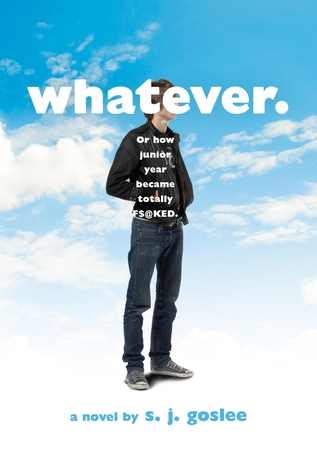
Whatever.
Whatever., by S.J. Goslee
       I certainly learned a lot about the topic of gender fluidity.  I was vastly uninformed, and I feel that Garvin handled the heavy concept of gender identity with respect and awareness.  I also recently finished reading the novel, Whatever., by S.J. Goslee, which is about a teen named Mike who discovers he is gay.  Although the novels are uncomparable as pertaining to characters and writing styles (and no offense to Goslee - your novel was hilarious), I can honestly say that I think Garvin was more respectful than Goslee in his approach of the subject.  By taking care to write an accurate, and more importantly, serious, plot line, Garvin spreads information about gender fluidity.

       Frankly speaking, I'm glad I decided to pick Symptoms of Being Human off the shelf of new novels at the public library.  It wasn't one of the typical comedic or fantasy novels that I typically gravitate towards, and I knew that solely based on reading the inside cover.  I wasn't sure how I would feel about the gender identity discussions, and I didn't feel in my comfort zone , but I learned a lot and my eyes were opened.  I'm glad I gave it a shot, and I recommend you do the same.

Happy reading, and best of luck to everyone in the new school year!
Katie

Thursday, August 25, 2016

Book Review: Populazzi

Populazzi
Title: Populazzi
Author: Elise Allen
Publication Date: August 1, 2011
Publisher: Harcourt Children's Books
Genre: Realistic fiction
Pages: 400
Age Rating: Readers over 13
My Opinion: 6/10

Hi, Readers!

       Wow, I can't believe how fast summer has gone by.  I just realized how long it has been since my last post!  Guess I've been pretty busy.  In a week or so, I will be packing up to return to school for my sophomore year of college.  With it will come new opportunities and adventures, but I will always treasure the memories I've made this summer.  Having such a crazy summer definitely took a toll on my daily reading.  However, I've had a couple of weeks of relaxation in which I've read a few novels, one of which being Populazzi, by Elise Allen.  Although the novel lacks substance and is extremely cliche, it was an entertaining read that managed to captivate my interest.
High school popularity chart
High school popularity
as described by Pintrest

       When Cara switches high schools for the start of her junior year, her childhood friend Claudia comes up with a social experiment of sorts to help Cara move up the popularity ladder at her new school.  Cara starts off on the bottom rung, meeting a lovable theater geek named Asher.  However, Claudia encourages her to continue working her way up to become the Supreme Populazzi - the most popular girl in school.  Cara's mother and step-dad encourage her to focus on her college interview for Northwestern, but instead, Cara continues to form new relationships and delves deeper into the foundation of high school cliques as she becomes wrapped up in her social life.  Will she be able to balance her new image with who she truly is, or will she crack under the pressure?

       Populazzi has got to be one of the most cliche high school popularity novels I have ever read.  And I'm not saying that's a bad thing!  It was a pretty basic plot line - the new girl willing to do anything to become popular.  The characters weren't even that likable, aside from the heartthrob, Archer.  For some reason, though, the mindlessness of the novel and the mob mentality made me want to keep reading.  I knew exactly what would happen, and I liked it.  Populazzi is what I would call a "safe" read.  You know exactly what you're getting - the fantasized high school experience with mean girls, bullies, jocks, and theater geeks - with no surprises, and that was perfectly fine with me.

       Many characters were extremely stereotypical.  From Archer, the theater geek, to Nate, the stoner, to Claudia, the clingy best friend, each character portrayed a different high school stereotype.  Again, absolutely no surprises.  I don't think anyone would be surprised to hear that Cara became wrapped up in search of popularity and ditched her old friends.  It was nice - almost relaxing - to know exactly who each character was.

       Of course, the novel culminated with a school dance.  I don't know how many different ways I can possibly phrase the same thought - CLICHE.  But I still kept reading!  I was entertained!  The silly, simpleminded and self-centered high school drama made me thankful to be in college, but also made me laugh.  Therefore, I can't give Populazzi a high rating and I will not recommend the novel, but it was funny and endearing, and I thoroughly enjoyed it as a summer pleasure read.  What have you been reading this summer?  Feel free to leave a comment below - I love hearing from readers!

Happy reading!
Katie

Wednesday, March 16, 2016

Book Review: Fear and Loathing in Las Vegas

Fear and Loathing
Title: Fear and Loathing in Las Vegas
Author: Hunter S. Thompson
Publication Date: 1971 (1998 edition)
Publisher: Vintage Books
Genre: Realistic fiction
Pages: 204
Age Rating: Readers over 15
My Opinion: 9/10

Hi, Readers!

       I feel like I'm starting to hit my post-modern stride.  Although Fear and Loathing in Las Vegas is never a book I would choose to read on my own, I thouroughly enjoyed reading it.  Hunter S. Thompson did an excellent job mixing his background in journalism with his interest in writing a novel.  It was one of the most eye opening (and utterly hilarious) books that I have ever read, but not in the way that you'd expect.  

movie
Duke and Dr. Gonezo from the movie version
       Duke, a journalist, is sent to Las Vegas to report upon the Mint 400 motorcycle race, and he brings along his attorney, Dr. Gonezo.  However, their journey ends up being the opposite of a business trip.  They fill a convertible with a plethora of powerful drugs, alcohol, and even a handgun, and set off for the city that never sleeps.  After spending days exploring Circus-Circus, seriously abusing narcotics, and causing trouble, Dr. Gonezo sends Duke a note inviting him to report on a drug convention held for police officers around the country.  Thompson's sense of irony is astounding; he sends two of the biggest drug users into an anti-drug convention filled with cops.  Run-ins with police, poor decision making, and a lack of sleep lead to Duke's imminent insanity as he seeks his own unique version of the American Dream in Las Vegas.

       For some strange reason, Fear and Loathing in Las Vegas was not available in my college bookstore, so I had to order it on Amazon.  I had it shipped to my house, and my mom gave it to me after one of my basketball games.  When she handed me the novel, she gave me a weird look.  "I read the back of the cover... you know this book is all about drugs, right?" she asked me.  I laughed, and replied, "That's American Fiction from 1950 to Present for you."  All joking aside, Fear and Loathing in Las Vegas is extremely drug-addled.  It is actually somewhat based on Hunter S. Thompson's own life, as well, so his many descriptions of various narcotics of different strengths seem to be extremely accurate.  Sometimes, I was actually overwhelmed by the terminology used.  Although I was definitely in shock about Duke's constant state of being high, it was definitely a perspective that I have never read about before, and it was quite a unique character viewpoint.  Las Vegas is the perfect setting, as well, because all of the flash and dazzle is amplified by being mentally and/or physically incapacitated.

Las Vegas       Maybe it's Thompson's drug-addled characters, or maybe it's just the ludicracy of the plot line, but Fear and Loathing in Las Vegas is absolutely hilarious!  One of my favorite scenes in the novel is when Duke and Dr. Gonezo go to a taco stand.  Thompson spends three entire pages discussing the different types of tacos that they are debating on ordering.  Basically the whole time I was reading, I was like... "What the heck?"  To be completely honest, sometimes reading a novel as ridiculous as this can be a great escape from the dreary reality of rainy days filled with tedious college busywork.  

       I would definitely recommend Thompson's novel to my college-aged friends.  However, super conservative readers will NOT find it to be entertaining, quality literature.  The main characters are actually on drugs for the entirety of the narrative.  Don't say I didn't warn you in advance.

Happy reading!
Katie

Wednesday, March 9, 2016

Book Review: Play It As It Lays

Play It As It Lays
Title: Play It As It Lays
Author: Joan Didion
Publication Date: 1970 (2005 edition)
Publisher: Farrar, Straus and Giroux
Genre: Realistic fiction
Pages: 213
Age Rating: Readers over 14
My Opinion: 8/10

Hi, Readers!

       I have finally reached a breakthrough - I'm finally starting to understand post-modernism!  Woohoo!  Joan Didion does an excellent job representing the difficult power dynamics of Hollywood for both males and females in the 1970's in Play It As It Lays.  It's not a novel that I would typically enjoy, but Didion's powerful yet concise writing drew me in and held my attention.

Hollywood       Maria (pronounced Mariah by my professor, but I'm doubtful) is a washed up Hollywood actress struggling to come to terms with her separation from her husband, Carter, the absence of her institutionalized child, Kate, and her various affairs with different men.  When Carter forces her to get an abortion, she spirals into depression and is only able to talk to her friend BZ, a movie producer.  She goes through the motions of life while watching those around her.  Maria's observations give her a number of insight to life as she knows it, and she questions what her purpose is and how to continue on with life.

       As you can most likely tell based on that short summary, Play It As It Lays deals with a variety of very diverse issues - abortion, monogamy and affairs, depression, the Hollywood system of patriarchy, sexual orientation, and identity.  These issues can be quite overwhelming at first because Didion throws readers right into the plot with hardly any character introduction.  We are forced to learn more about the characters and their histories as the novel progresses, making Didion's character development extremely interesting to read about.  One of my favorite characters is BZ because his identity slowly becomes revealed piece by piece over time.

Didion
Author Joan Didion
       One of the most interesting characteristics of Didion's writing in Play It As It Lays is the length of the novel's chapters.  The longest chapter cannot be more than five pages in length, and some chapters are as short as a few sentences.  Each chapter seems to be a different moment in Maria's life.  At first, they seem unrelated, but as the story develops, the chapters become more and more intertwined.  By the end, it reads as a practically coherent novel and many truths become evident.

       I personally found Didion's discussion of life in Hollywood during the 1970's to be fascinating.  Although her characters are not particularly likeable, they are very complex and well-developed.  I would recommend Play It As It Lays if you are looking for a fairly comprehensible post-modernism novel.

Happy reading!
Katie

Wednesday, March 2, 2016

Book Review: Why Are We in Vietnam?

Why Are We in Vietnam?
Title: Why Are We in Vietnam?
Author: Norman Mailer
Publication Date: 1967 (2000 edition)
Publisher: Picador
Genre: Realistic fiction
Pages: 215
Age Rating: Readers over 14
My Opinion: 6/10

Hi, Readers!

       Don't be fooled by the title of Norman Mailer's novel, Why Are We in Vietnam? - its setting is not the dangerous, war-torn jungles of Vietnam.  Instead, he explains his own version of the Vietnam War by creating an elaborate metaphor about a hunting trip in the Alaskan wilderness focusing on a corporate executive and his son.  Mailer's stream-of-consciousness writing is unique, but in my opinion, Why Are We in Vietnam? lacks excitement and was not able to hold my interest.

       Why Are We in Vietnam is narrated by D.J., a wealthy, white teenager from Texas who is contemplating the idea of identity.  D.J. disjointedly tells the story of a hunting trip that he went on with his father, his best friend, and some of his father's employees.  His father, Rusty, is on a mission to shoot a grizzly bear.  A power dynamic comes into play when one of his employees, MA ("medium asshole") Pete, takes down a grizzly before he does.  At that point, Rusty and D.J. head off on their own in search of a hunt, and their father-son relationship is called into question.  Afterwards, D.J. and his friend attempt a "purification ceremony" in which they delve into the wilderness without weapons or supplies.  Mailer uses the backdrop of Alaska to focus on complex character dynamics that metaphorically mirror that of soldiers in the Vietnam War.

quote
A quote from the author, Norman Mailer
       D.J. tells his narrative using a fluid timeline, and almost every chapter has a brief (and utterly perplexing) introduction, called an "Intro Beep".  These Intro Beeps serve to set the scene for what is to come, but they do so in underhanded ways and seem to have nothing to do with the story due to D.J.'s stream-of-consciousness discussions.  Although the timeline of the storytelling is difficult to follow at points, Mailer does an excellent job including D.J.'s discourse about identity.  Throughout the novel, Mailer forces readers to question reality by randomly throwing in that D.J. could be a white teen from Texas or that he could be a famous black disc jockey from Harlem.  It is pretty clear that D.J.'s true identity is that of the white teen, but the novel still calls into question what is actually true and what is fictitious.

       The aspect of Mailer's writing that receives the most criticism is his inclusion of obscenities.  Please be forewarned if you decide to read Why Are We in Vietnam? - almost every single page has swear words casually thrown into sentences. There are probably more bad words in this book than in all of the novels I've read... combined.  I personally find it interesting how Mailer is mimicking the rough dialogue of soldiers in the Vietnam War, and much of the language adds a comical air to a somewhat heavy subject, but it can be a bit of a shock to see so many vulgar words.

      Why Are We in Vietnam definitely grew on me as I kept reading it.  In the beginning, I thought that I would dislike it just as much as I have disliked the previous post-modernism novels that I had to read for American Fiction from 1950 to Present.  Luckily, it transitioned from having confusing narration to becoming more clear by the end.  I wouldn't personally recommend the novel, but I do think it has its merits and is a strong piece of literature.

Happy reading!
Katie

Wednesday, February 10, 2016

Book Review: No-No Boy

No-No Boy
Title: No-No Boy
Author: John Okada
Publication Date: 1957 (2014 edition)
Publisher: University of Washington Press
Genre: Realistic fiction (now considered historical)
Pages: 232
Age Rating: Readers over 12
My Opinion: 8/10

Hi, Readers!

       I am pleased to announce, with a sigh of relief, that No-No Boy, by John Okada, is a much simpler novel to understand than the last novel I read for American Fiction from 1950 to Present, The Subterraneans.  Thank goodness!  It also has a much more intriguing plot line and more reachable characters.  The strongest aspect of No-No Boy, however, has to be its focus on minority groups that are not usually discussed in literature.  Although it was written in its time as realistic fiction, it can now be considered historical and it opened my eyes to a twentieth century issue that I was entirely unaware of.

car
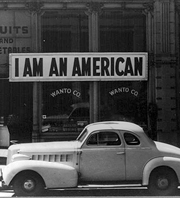
The rights of Japanese Americans
were called into question
       During the Second World War, thousands of Japanese Americans were forced into internment camps in the midwest due to their ethnicity.  While in these camps, they were forced to answer a questionnaire determining their loyalty to the United States, in which two questions asked if they pledged allegiance to the US (thus denouncing Japan) and if they were willing to serve in the American military.  Men who answered "no" to both questions were immediately labeled "No-No Boys" and were either deported or sent to prison.  Okada's novel focuses on Ichiro Yamada, a No-No Boy who is released after two years in jail, and his attempt to reintegrate himself into society.  When Ichiro reunites with his family and friends, he realizes that he is no longer considered a respected member of the country that he grew up in.  He faces a long journey of self-discovery filled with doubts and trials, and Okada questions the character of America as a whole in the powerful novel.

       As my professor described to us in class, No-No Boy is, in reality, a novel about a minority group inside of another minority group.  No-No Boys were the minority of Japanese Americans, and Japanese people were a minority in America.  Interestingly, the Japanese American community rejected Okada's novel when it first came out, most likely because of its honest depiction of the hardships the group endured and the reality of the treatment of No-No Boys.  To be completely honest, I had never even heard of No-No Boys before reading the novel, which is why I found it so enlightening.  It discusses touchy subjects in American history that few novels even have the guts to address.

flag       One downside of No-No Boy is the portrayal of many unlikeable characters.  For starters, although Ichiro has been through a lot over the past couple of years of his life, he is not a particularly 'likeable' character.  He complains often, resorts to drinking away his feelings, and is rude to his family and friends.  I may seem harsh, but I'm not going to cut Ichiro any slack because his friend Kenji goes through events just as tortuous as his own and manages to retain a positive outlook on life.  Next, Ichiro's mother is indubitably portrayed as a villain throughout the novel, and she is one of the meanest characters I have ever come across.  Her selfish disillusionment hurts everybody around her and causes her to self destruct as she refuses to believe that Japan lost the war.  No-No Boy is portraying an extreme minority audience, and I cannot speak for anyone except for myself, but it's practically impossible for me to relate to what the characters are going through.

       I certainly cannot call into question the power of Okada's novel.  It does an excellent job addressing the social and racial issue of the No-No Boys of World War II, and it opened my eyes to a completely unique lifestyle.  However, I wasn't the biggest fan of the characters in the novel, which turned me off at points.  I would recommend No-No Boy to lovers of historical fiction, but it is not a light-hearted novel for casual readers.

Happy reading!
Katie

Wednesday, February 3, 2016

Book Review: The Subterraneans

The SubterraneansTitle: The Subterraneans
Author: Jack Kerouac
Publication Date: 1958 (1994 edition)
Publisher: Grove Weidenfeld
Genre: Realistic fiction
Pages: 111
Age Rating: Readers over 16
My Opinion: 6/10

Hi, Readers!

       What better way to start off the semester of American Fiction from 1950 to Present than by reading one of the most confusing books known to mankind?  Jack Kerouac's The Subterraneans is the most disjointed and seemingly illiterate novel that I've ever read.  That being said, Kerouac's writing style is so original that his strange assertions and interesting language are simultaneously captivating and repulsing.  To be completely honest, I am still debating whether or not I actually enjoyed reading The Subterraneans, but it was definitely... unique.

       The Subterraneans are a group of about twenty young adults living in San Francisco in the early 1950's, and they embody the "hipster" identity.  From drugs to drinking to contemplating life, the Subterraneans aspire to be junkies and to do practically nothing with their lives.  Strangely enough, Leo Percepied wants to be just like the Subterraneans, even though he is about ten years older than all of them and doesn't fit in at all.  His Hawaiian shirt  and "crudely, malely sexual" (Kerouac) personality are in stark contrast to the berets and haughty language of the Subterraneans, yet he manages to worm his way in.  Leo is immediately taken by Mardou, an African American and Native American woman who is viewed as one of the most desirable of the group.  Mardou eventually accepts Leo's advances, and the rest of the novel tells the intricate story of their delicate relationship and their involvement with the rest of the Subterraneans.

cover
An alternate cover depicting
Leo and Mardou
       You're probably thinking, based on my short summary above, that The Subterraneans doesn't seem too complex.  Well, let me put it this way: you're wrong.  The writing style of The Subterraneans is one of the reasons that it is widely acclaimed, but it also forces readers to dig their way through sentences that are as long as paragraphs and large sections of text that don't follow any basic gramatical rules (the horror!).  In class, my professor later explained to us that Kerouac did not revise the novel.  At all.  Zilch.  Zero.  The Subterraneans is a first draft that contains Kerouac's most private thoughts, some of which probably should not be shared with the public.  He tends to interrupt his own writing and does not follow a logical time sequence, making it difficult to follow even the simplest of anecdotes. However, one thing is for sure - Kerouac's stream-of-thought style writing is honest, raw, and uncut.

       The Subterraneans was written in 1953 and published in 1958, basically right at the beginning of the Civil Rights Movement.  Therefore, Kerouac, as a white male, was not the only one of the time demonstrating racism.  However, this does not serve as an excuse - as my professor aptly stated, Kerouac really should have edited his writing.  Some of the statements that he makes about Mardou based on her skin color are absolutely ridiculous.  For instance, he thinks that her body is somehow different than that of a white woman, and he also blindly stereotypes the story of her past, especially relating to the history of her Native American father.  Kerouac's unfiltered writing style is part of what makes The Subterraneans such an interesting piece of writing, but it also leads to many uncomfortable statements and racist assertions.

Jack Kerouac
Jack Kerouac
       Lastly, Kerouac managed to offend quite a few people with his lack of revisions, namely because he based his characters off people he knew in real life.  Leo is loosely based on himself, and the novel is actually only "semi-fictional" because Kerouac based it off one of his own romances.  This only adds to my agreement that Kerouac should have revised his writing before publication, but his characters certainly have depth.

       All in all, it's tough to get a good grasp on Kerouac's writing.  I know that what I read was, in a way, brilliant and ingenious, but I was also left feeling dazed and confused.  Kerouac is an amazing writer, but I think some of his ideas went over my head.  I can't say I would recommend reading The Subterraneans for pleasure - it takes way too much concentration to make it through the novella.

Happy reading!
Katie

Thursday, November 20, 2014

Book Review: The Spectacular Now

The Spectacular Now
Title: The Spectacular Now
Author: Tim Tharp
Publication Date: November 1, 2008
Publisher: Alfred A. Knopf Books for Young Readers
Genre: Realistic fiction
Pages: 304
Age Rating: Readers over 13 due to substance abuse
My Opinion: 8/10

Hi, Readers!

Have you ever come across a character that you love to hate?  Well, I found one when I was reading The Spectacular Now, by Tim Tharp.  I don't think I've ever read a book where I was so intrigued by the main character but still managed to hate every decision he made.  And I'm not exaggerating.  I still can't believe that I liked this book as much as I did, because the character that Tharp created is terribly skewed in his way of thinking.

Sutter and Aimee from the movie
       Sutter Keely is always the life of the party.  Any high schooler who wants to have a good time knows to seek out Sutter.  Although the ladies seem to love him at parties and at school, Sutter can't manage to keep a girlfriend.  They all break up with him after a couple of months, and he can't figure out why.  Weirdest of all, every single one of Sutter's ex-girlfriends wants to stay friends with him.  When his dream girl breaks up with him, Sutter wonders if he has to make a change to his lifestyle.  After a rough night of partying, he wakes up on a girl named Aimee's front lawn and decides to make the shy, intelligent girl his "project".  He believes that if he helps Aimee to climb the social ladder, he will be doing some good in the world and his life will return to normalcy.  However, as Sutter grows closer to Aimee, he becomes even more confused about his feelings, and it will take a lot more than parties and alcohol to solve his problems.

       Let me make this very clear before you decide to read this book - take everything Sutter says with a grain of salt.  He claims that he's not an alcoholic.  LIES.  Sutter is drunk throughout every page of the book.  I can't believe he gets away with it - he's drunk at work, during school, while driving... You'd think somebody would stage an intervention.  Sadly, Sutter doesn't have a strong support system.  Tim Tharp does a wonderful job of incorporating Sutter's broken family as a subplot while keeping the emphasis on Sutter's relationships.

       I am so frustrated at how likeable a character Sutter is, because I want to hate him.  (Be prepared for a rant here.)  He is drunk all the time, turns Aimee into a lush, doesn't care at all about those around him, and thinks the world revolves around him.  He breaks the law on a regular basis, he skips school, and he disregards authority.  And trust me, I could keep this list going.  But, Sutter's friendly attitude, hilarious anecdotes, and overall warm character makes him irresistible.  I'm sure that, although he has many, many flaws, Sutter would be a very fun friend to have in real life.

       Once I finished reading The Spectacular Now, I thought for a good five minutes about what the point of the book was.  I felt impacted, but I did not know how.  I was very disappointed at how the book ended, but only because I NEEDED to know what happened to all of the characters because I felt so emotionally attached to them.  I would highly recommend that any high schooler, especially boys, would read The Spectacular Now, but trust me when I say it leaves you questioning and wanting more.  My next step is to watch the movie adaptation, and I'm hoping that Miles Teller will portray Sutter to his full extent of awesomeness.

Happy reading!
Katie


Wednesday, November 5, 2014

Book Review: To All The Boys I've Loved Before

To All The Boys I've Loved Before
Title: To All The Boys I've Loved Before
Author: Jenny Han
Publication Date: April 15, 2014
Publisher: Simon & Schuster Books for Young Readers
Genre: Realistic fiction
Pages: 288
Age Rating: Readers over 13
My Opinion: 9/10

Hi, Readers!

       Sometimes good books come from unexpected sources.  I was reading a Seventeen magazine (don't judge me!!!!), and I saw an ad for To All The Boys I've Loved Before.  After looking at the adorable cover and reading the short summary of the book, I took a picture of the cover with my phone and then forgot about it.  Finally, three months later, I got around to checking it out from the library, and boy, am I glad that I did.  This is possibly because I just finished reading an extremely boring book, but I was absolutely entranced by Jenny Han's light and funny style of writing.  I would highly recommend To All The Boys I've Loved Before to any high school girl.

       When Lara Jean's mother was still alive, she gave her a teal hat box and told her to put her most prized possessions inside.  Lara Jean takes her mom's advice and fills the box with five love letters.  However, these are no normal love letters - she writes each one when she is done being in love with a different boy and wants to move on.  She never expects anybody to read them.  So when the letters are accidentally mailed, well, things get a little crazy.  Each of the five boys reacts in a different way, and Lara Jean ends up in a love triangle that she never thought was possible.  She has to navigate these difficult relationships while taking care of her family at the same time, a feat that is practically impossible.

quote
       My favorite part of the novel is that Jenny Han created characters that I fell in love with.  They are all so lifelike that when I was reading, I felt like I was actually hanging out with Lara Jean and her family.  My favorite character would probably be Lara Jean's little sister, Kitty.  She's a stereotypical younger sibling, always getting on everybody's nerves, but she is extremely intelligent and witty.  I also love the relationships between the characters.  Of course, Han focuses on the relationships between Lara Jean and the boys, but she also incorporates Lara Jean's relationship with her two sisters and her father into the plot.  Lara Jean's mourning of her mother is extremely realistic - she obviously misses her mother greatly, but she is not hung up on it and this seems to free up the story.  I'm so impressed with how Han incorporated a few major social issues into the book while keeping it so upbeat and positive.

       Lara Jean is just such a fantastic character that I could go on and on about her forever.  She is everything that a female protagonist should be - strong but caring, smart, and passionate.  Although she has a few flaws, they are flaws that the majority of high school girls can relate to.  Reading about Lara Jean falling in love for the first time made me feel butterflies in my stomach alongside her, and I was rooting for her relationship to work out the whole time.  I truly wanted Lara Jean to be happy, which is quite a feat considering she is a fictional character.

cookie       Just to clarify, though, To All The Boys I've Loved Before is only for a female audience.  Male readers definitely wouldn't enjoy it as much as I did.  I think that grown-ups would enjoy reading it and find it to be a cute book, but it is perfect for high school and even college-aged girls.  Now, every time one of my friends asks for a book suggestion, I am totally telling them to read To All The Boys I've Loved Before.

Happy reading!
Katie


P.S. I just found out there's a sequel coming out on my birthday next year!!!!!  I can't wait!  (P.S. I Still Love You, being released on April 21, 2015)